US
US 

Athletes recover faster when the parasympathetic nervous system reactivates quickly after training. Targeted vagus nerve activation is one of the most effective ways to drive that shift into rest-digest-recover mode, as reflected by easier heart rate (HR) drop and higher heart rate variability (HRV). The right sequence of breath, body position, vocalization, and brief non-invasive stimulation can accelerate the transition from sympathetic “flow and grow” to parasympathetic “rest and recover,” improving readiness for your next training session.
Why Vagus Nerve Activation Matters for Post-Workout Recovery
After intense efforts, sympathetic drive remains elevated even when the session ends, delaying heart rate recovery and prolonging stress chemistry. Timely parasympathetic reactivation shortens this window and accelerates restoration of homeostasis.
Faster heart rate recovery is associated with higher resting cardiovagal modulation, underscoring the performance value of building vagal tone across training cycles.1 Data shows post-exercise recovery techniques can produce improvements in vagally mediated HRV, with effectiveness depending on the method and exercise type.2
Hard efforts keep the body revved up even after you stop. If that “on” switch stays stuck, sleep, digestion, and energy take a hit. A quick post‑workout sequence that calms the vagus nerve helps the body reset sooner so recovery starts right away.
How Non-Invasive Vagus Nerve Stimulation Supports Post-Workout Recovery
Non-invasive vagus nerve stimulation (nVNS) provides a brief, targeted parasympathetic push that complements breath and positional strategies immediately after sessions.
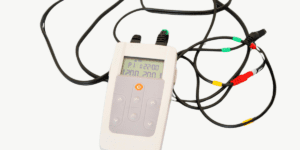
Truvaga is a handheld, wellness nVNS device designed for simple two‑minute sessions that fit seamlessly into routines and can be used at home, at the gym, or on the go to support autonomic balance and HRV benefits linked to vagal activation. Athletes use it as a bridge from sympathetic output to recovery, pairing it with slow nasal breathing to deepen the parasympathetic shift in minutes.
Post Workout Vagus Activation Protocol
- Step 1: Position and decompress (1–2 minutes): Lie supine (on your back) with legs elevated or assume a relaxed seated position; a supine posture is associated with faster parasympathetic reactivation in immediate recovery windows. Loosen the neck and shoulders with gentle range-of-motion to reduce tension along the antero-lateral cervical region near the cervical vagus nerve pathway.
- Step 2: Controlled nasal diaphragmatic breathing (2–4 minutes): Breathe in through the nose for 4 seconds and out for 6–8 seconds, emphasizing low, diaphragmatic expansion and longer exhales to bias vagal activation and downshift arousal. Keep one hand on your chest and one on your belly to ensure diaphragmatic breath pattern. Maintain a smooth cadence without breath-holding; if HRV tools are used, aim for gradual HR decline and increased beat-to-beat variability over these minutes.
- Step 3: Truvaga session (2 minutes): Apply Truvaga per device guidance to deliver a two‑minute nVNS session, leveraging precise, short-dose stimulation to augment parasympathetic tone and complement breath‑led recovery. This brief bout is designed to be the easiest insert in a busy training day, acting as a catalyst for the broader recovery sequence. Pair this with 2 minutes of slow diaphragmatic breathing.
- Step 4: Humming or soft chanting (1–2 minutes): On each exhale, hum gently through your nose, with your mouth closed, to create throat and chest vibration, which mechanically stimulates vagal pathways and can support HRV improvement similar to meditative breathing effects. Combine with nasal inhales between hums to enhance nitric oxide flow and maintain diaphragmatic mechanics during the transition to calm.
- Step 5: Cool exposure or contrast optional (2–5 minutes, context‑dependent): Where appropriate for the session and sport, consider cold water immersion for a short, targeted dose; among physical techniques, cold shows a comparatively larger positive effect on post‑exercise HRV in pooled analyses, particularly after resistance work. Use judiciously based on training goals, as cold timing can interact with hypertrophy signaling even while aiding autonomic recovery.2
- Step 6: Quiet recovery breath and stillness (2 minutes): Return to slow nasal 4–6 second inhales with 6–8 second exhales while resting supine or seated to consolidate the parasympathetic shift and stabilize heart rate recovery. If monitoring, look for steady increases in short‑term HRV indices across the 10–15 minute window post‑exercise, reflecting vagal reactivation.
Practical Tips for Teams and Endurance Athletes
- Time box to 8–12 minutes when needed: Even abbreviated sequences with 2–3 minutes of nasal breathing plus a two‑minute Truvaga session can meaningfully support autonomic recalibration after hard sets or intervals. Apply between blocks during high‑volume training days to prevent sympathetic spillover into subsequent work.
- Prioritize after resistance and intermittent sessions: Evidence suggests greater benefits of physical recovery techniques on vagal HRV after resistance and intermittent cardio sessions versus continuous cardio, guiding where to emphasize the protocol. Use the full sequence after heavy lifts, sprints, or team practices; trim steps after easy aerobic work.3
- Track HRR and HRV: Use heart rate recovery (HRR) over the first 1–2 minutes and short‑term HRV snapshots as objective markers of parasympathetic reactivation and readiness trends from session to session. Faster HRR and improved HRV profiles indicate effective vagal activation and better recovery capacity over time.4
Bottom Line for Athletes
Systematically activating the vagus nerve post‑exercise helps the body exit sympathetic drive more quickly, improving HRR, HRV, mood, and next‑day readiness for quality training. A concise protocol combining nasal diaphragmatic breathing, two‑minute Truvaga nVNS, vocalization, and position can be deployed anywhere to accelerate parasympathetic reactivation and recovery.
Make this your non‑negotiable cooldown to protect adaptations, reduce allostatic load, and show up better for your next effort.
FAQs for Athletic Recovery Through Vagus Nerve Activation
Why is vagus nerve activation important after exercise?
Post-exercise vagus nerve activation helps shift the body from sympathetic “fight-or-flight” into parasympathetic recovery mode. This accelerates heart rate recovery (HRR), increases heart rate variability (HRV), and supports faster restoration of homeostasis so athletes can recover more efficiently for their next session.
How does non-invasive vagus nerve stimulation (nVNS) support athletic recovery?
Non-invasive VNS provides a brief, targeted boost to parasympathetic activity. When used immediately after training, it complements breathing and positional strategies to accelerate HRR and improve vagally mediated HRV, key markers of recovery readiness.
What role does breathing play in vagal activation?
Slow nasal diaphragmatic breathing with longer exhales biases the parasympathetic system. This breath pattern helps lower heart rate, increase beat-to-beat variability, reduce arousal, and prime the body for a quicker shift into rest-and-recover mode.
How does vagus-directed recovery influence heart rate recovery and HRV?
Techniques that activate the vagus nerve immediately after training can speed up heart rate recovery (HRR) and elevate short-term HRV, two key markers of parasympathetic rebound. Faster HRR and rising HRV trends indicate the body is restoring balance efficiently between sessions.
How can Truvaga fit into an athlete’s post-workout recovery routine?
Truvaga’s two-minute nVNS sessions are designed for easy use at the gym, at home, or on the go. Athletes pair it with slow nasal breathing to deepen parasympathetic activation, making it a simple, repeatable tool to improve HRR, HRV, and overall recovery quality.
Author bio:

Dr. Navaz Habib
Functional Health Practitioner. Author. Speaker.
Dr. Navaz Habib, known as the Vagus Nerve Doc, is a functional medicine expert and bestselling author of "Activate Your Vagus Nerve" and "Upgrade Your Vagus Nerve," dedicated to empowering health through vagus nerve activation. He is the founder of Health Upgraded, an online health program and community that guides members to enhanced well-being using his VAGUS protocol. Connect with him on Instagram @DrNavazHabib for tips on nervous system balance and functional health.References:
- Ndongo, J. M., et al. (2023). Post-exercise heart rate variability recovery after 800-m run loads on cardiac autonomic recovery among school adolescents. PMC. https://pmc.ncbi.nlm.nih.gov/articles/PMC10831379/ PMC
- Laborde, S., Wanders, J., Mosley, E., & Javelle, F. (2024). Influence of physical post-exercise recovery techniques on vagally-mediated heart rate variability: A systematic review and meta-analysis. Clinical Physiology and Functional Imaging, 44(1), 14-35. https://onlinelibrary.wiley.com/doi/10.1111/cpf.12855 PubMed+1
- Laborde, S., Wanders, J., Mosley, E., & Javelle, F. (2024). Influence of physical post-exercise recovery techniques on vagally-mediated heart rate variability: A systematic review and meta-analysis. Clinical Physiology and Functional Imaging, 44(1), 14-35. https://pubmed.ncbi.nlm.nih.gov/37754676/ PubMed
- da Fonseca, R. X., da Cruz, C. J. G., Von Koenig Soares, E. M., Lago Garcia, G., & Porto, L. G. G., et al. (2024). Post-exercise heart rate recovery and its speed are associated with resting-reactivity cardiovagal modulation in healthy women. Scientific Reports, 14, 5526. https://www.nature.com/articles/s41598-024-51842-w