US
US 

If you’ve started researching vagus nerve stimulation devices, you’ve probably noticed there’s more than one way to reach this powerful nerve. Cervical devices target the main nerve trunk in your neck, auricular devices stimulate a small branch in your ear, and wearables take various indirect approaches, each with different levels of vagus nerve access and clinical support.
The differences matter more than you might think. This guide breaks down how each type works, what the research shows, and how to figure out which approach fits your wellness goals.
What is vagus nerve stimulation and why does it matter
Cervical, auricular, and wearable VNS devices all aim to stimulate the vagus nerve without surgery, but they work in different ways. Cervical devices deliver electrical pulses through the neck to reach the main vagus nerve trunk, where both sensory and motor fibers are concentrated. Auricular devices target a smaller branch in the ear that contains only sensory fibers, about (1% of the vagal fibers), while wearable devices often use vibration or other indirect methods that may not effectively reach or activate the vagus nerve.
The vagus nerve and your stress response
The vagus nerve is the longest cranial nerve in your body. It runs from your brainstem down through your neck and branches out to your heart, lungs, and digestive organs. Think of it as a two-way communication line between your brain and your body’s internal systems.
When stress hits, your sympathetic nervous system kicks into gear—that’s the “fight-or-flight” response. The vagus nerve does the opposite. It activates your parasympathetic nervous system, sometimes called “rest-and-digest” mode, which helps slow your heart rate and ease tension throughout your body.
How VNS activates your parasympathetic nervous system
Vagus nerve stimulation sends gentle electrical signals along the nerve fibers that connect to your brain. In simple terms, it’s like tapping your nervous system on the shoulder and saying, “Hey, you can relax now.”
When the vagus nerve receives this input, it encourages your body to shift out of high alert. Many people notice slower breathing, a calmer mind, or clearer thinking after a session.
Non-invasive VNS vs implanted devices
Implanted VNS devices require surgery and are typically reserved for conditions like epilepsy or treatment-resistant depression. Non-invasive options work through the skin, so there’s no surgical procedure involved.
- Implanted VNS: Surgically placed, usually prescribed for specific medical conditions
- Non-invasive VNS: Applied externally, available for everyday stress relief and wellness
The rest of this article focuses on non-invasive devices—the kind you can use at home as part of your daily routine.
How cervical vagus nerve stimulation works
Cervical VNS targets the vagus nerve along either side of your neck. This is where the main nerve trunk runs close to the surface, and where the concentration of vagal fibers is highest.
Targeting the vagus nerve through the neck
Transcutaneous cervical VNS delivers gentle electrical pulses through the skin on your neck. The word “transcutaneous” simply means “through the skin”—no needles, no incisions.
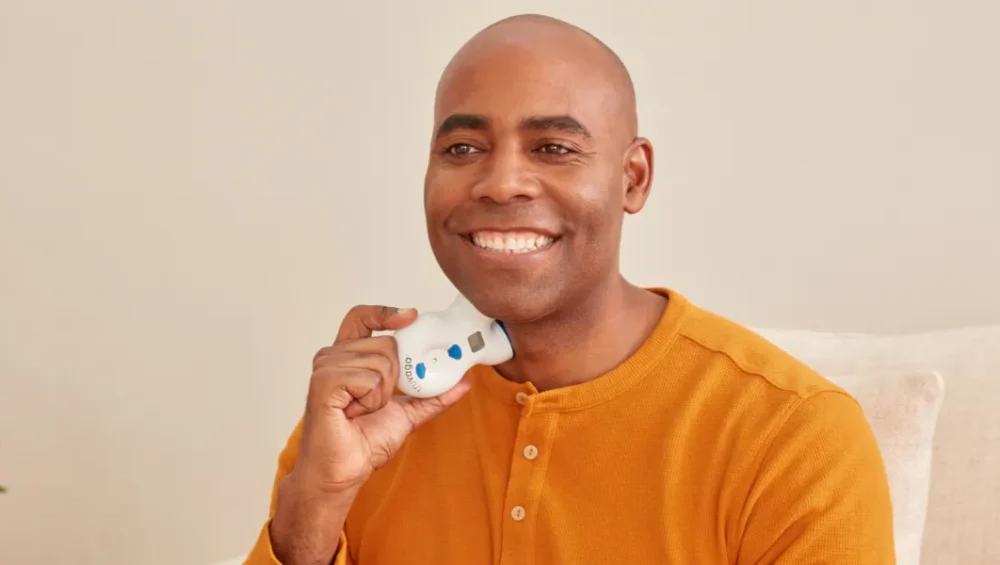
Handheld devices like Truvaga Plus are designed to be placed against the neck for short therapy sessions. Because the vagus nerve trunk is accessible here, cervical stimulation offers a direct path to the nerve’s main highway.
What happens in your body during cervical VNS
During a cervical VNS session, electrical signals travel along the vagus nerve toward the brain. The body appears to shift toward a calmer baseline when the vagus nerve is consistently stimulated.
Benefits of handheld transcutaneous cervical devices
Cervical devices offer a few practical advantages for daily use:
- Direct nerve access: Stimulates the main vagus nerve trunk, where fiber density is greatest
- Quick sessions: Most sessions take just a few minutes
- Portability: Small enough to use at home, at work, or while traveling
How auricular vagus nerve stimulation works
Auricular VNS takes a different approach by reaching the vagus nerve through the outer ear. A small branch of the vagus nerve surfaces in specific areas of the ear, making it accessible for stimulation.
Reaching the vagus nerve through the ear
The auricular branch of the vagus nerve innervates two small regions of the outer ear: the cymba conchae (the inner curve) and the tragus (the small flap near your ear canal). Devices designed for auricular stimulation typically clip onto or insert into the ear to target one of these spots.
Because this branch represents only a small portion of total vagal fibers and is confined to a limited area, ear-based devices often rely on longer or repeated wear times to deliver noticeable effects, rather than the brief sessions used with cervical stimulation.
What happens in your body during auricular VNS
Because auricular stimulation targets a smaller nerve branch, the effects may be more subtle than what you’d experience with cervical stimulation. The sensory signals still travel toward the brain, but the pathway is indirect.
Some users find auricular devices helpful for relaxation. That said, research comparing the two approaches suggests cervical stimulation tends to produce more noticeable physiological changes.
Types of ear-based tVNS devices
Ear-based devices come in a few different forms. Some look like earbuds and sit inside the ear canal, while others use clip-on electrodes that attach to the outer ear.
The style you choose often comes down to comfort and personal preference. Each design aims to deliver stimulation to the same general area where the auricular branch is accessible.
What are wearable vagus nerve stimulation devices
In the VNS world, “wearable” often refers to devices worn on the body throughout the day rather than used for focused therapy sessions. The approaches vary quite a bit from product to product.
Vibration-based wellness wearables
Some wearables use gentle vibrations applied to the wrist, chest, or other body areas. The idea is to influence the nervous system through sensory input rather than direct electrical stimulation of the vagus nerve.
While vibration can create calming sensations, the mechanism is different from true vagus nerve stimulation. The effects may be more about general relaxation than targeted nerve activation.
Electrical stimulation wearables
Other wearable devices do deliver electrical pulses, though they may target different nerve pathways or skin areas than dedicated VNS devices. The specificity of nerve targeting varies considerably across products.
When comparing options, it helps to understand exactly which nerve or pathway a device is designed to stimulate—and whether there’s research to back up those claims.
Session-based vs continuous wear devices
There are two main approaches to how VNS devices fit into your day:
- Session-based: Focused therapy in a few minutes, then removed
- Continuous wear: Worn for extended periods with lower-intensity stimulation
Session-based devices typically deliver more concentrated stimulation during a defined window. Continuous-wear options spread gentler input throughout the day, which may suit different preferences and lifestyles.
Comparing cervical vs auricular vs wearable VNS devices
With three distinct approaches available, understanding the key differences can help you figure out which one aligns with your goals.
How directly each type stimulates the vagus nerve
Cervical devices target the main vagus nerve trunk, where fiber density is highest. Auricular devices reach a smaller branch with fewer fibers. Wearables—especially vibration-based ones—may work indirectly or not target the vagus nerve at all.
Feature | Cervical VNS | Auricular VNS | Wearable Devices |
Stimulation target | Main vagus nerve trunk | Auricular branch (ear) | Varies by product |
Method | Electrical pulses to neck | Electrical pulses to ear | Vibration or electrical |
Session style | Short, focused sessions | Moderately long sessions | Often continuous wear |
Directness of nerve access | High | Moderate | Low to moderate |
Clinical evidence for each device type
Studies have shown that transcutaneous cervical stimulation can produce physiological changes associated with parasympathetic activation. electroCore, the makers of Truvaga, has conducted extensive research in this area, explore our research page to see the clinical evidence supporting cervical VNS.
Auricular VNS has also been studied, though some research suggests the effects may be less pronounced for certain outcomes. Vibration-based wearables are newer to market, with more limited clinical research specifically examining vagus nerve activation.
Comfort and ease of daily use
Handheld cervical devices require you to hold the device against your neck during sessions, typically just a few minutes. Auricular devices clip to your ear and can be worn hands-free. Body-worn wearables offer passive use throughout the day.
Your preference might depend on whether you want a focused, intentional therapy moment or background support during daily activities.
Safety and side effect considerations
Non-invasive VNS is generally well-tolerated across all device types. Some users experience mild tingling or warmth at the stimulation site, which typically fades quickly after the session ends.
All three approaches are considered low-risk for home use when following manufacturer guidelines.
How to choose the best vagus nerve stimulator for your needs
Picking the right device depends on what you’re hoping to achieve and how you’d like to fit VNS into your routine.
Matching device type to your wellness goals
If you’re looking for direct vagus nerve stimulation for stress relief, cervical devices offer the most targeted approach. Auricular options may work well for those who prefer ear-based stimulation. Wearables might appeal to anyone wanting passive, all-day support.
Considering lifestyle and convenience
Think about how a device fits into your day. Do you prefer a dedicated few minutes of focused therapy, or would you rather wear something continuously?
A few factors to consider:
- Your primary goal: Stress relief, sleep support, or mental clarity
- Preferred session style: Quick, focused sessions vs all-day wear
- Importance of clinical evidence: Look for research-backed devices
- Comfort preferences: Neck, ear, or body placement
Evaluating scientific backing and safety
When comparing options, look for devices supported by clinical research and designed with safety in mind. Truvaga Plus, for example, was developed by electroCore in collaboration with leading research institutions and is backed by studies examining its effects on brain activity and relaxation markers.
Why cervical VNS offers a direct path to stress relief
Cervical VNS provides the most direct access to the vagus nerve trunk, where the highest concentration of vagal fibers exists. Emerging clinical research supports its effects on brain activity and physiological markers of relaxation.
For those seeking a science-backed, convenient tool for daily stress management, cervical devices offer a focused approach that fits into even the busiest schedules. Truvaga Plus delivers targeted vagus nerve therapy in just two minutes—no prescription required.
FAQs about vagus nerve stimulation devices
Can you use a TENS unit as a vagus nerve stimulator?
No, TENS units are designed for muscle pain relief and use different parameters than VNS devices. They don’t target the vagus nerve specifically, and most TENS units are actually contraindicated for use on the neck due to safety concerns. Dedicated VNS devices like Truvaga are specifically engineered for safe, targeted vagus nerve stimulation in the cervical area.
How long does it take to feel results from a vagus nerve stimulation device?
Many users report a sense of calm during or shortly after their first session, but timing varies by person. Benefits for sleep and stress management often develop with consistent daily use over time.
Are there side effects from non-invasive vagus nerve stimulation?
Non-invasive VNS is generally well-tolerated. Some users experience mild tingling or skin sensation at the stimulation site, which typically fades quickly after the session ends.
Do you need a prescription for at-home vagus nerve stimulation devices?
Most consumer-grade non-invasive VNS devices, including Truvaga, are available without a prescription and designed for safe home use.
How often should you use a vagus nerve stimulator for stress relief?
Daily use is typically recommended for best results. Most devices are designed for short sessions that fit easily into morning or evening routines.
Author bio: