US
US 

Your body already knows how to calm itself down—it just needs the right signals. The vagus nerve, a long pathway connecting your brain to your heart, lungs, and gut, acts as the control switch between stress and relaxation.
When this nerve is functioning well, you recover from stress quickly and feel more emotionally balanced. When it’s not, you might find yourself stuck in a state of tension that never quite lets up, no matter how safe your circumstances actually are.
The following nine practices, supported by clinical research, can help you strengthen your vagus nerve and build lasting resilience against daily stress.
What is the vagus nerve and why it matters for mental health
The vagus nerve is the longest cranial nerve in your body. It starts at your brainstem and travels all the way down to your gut, with branches connecting to your heart, lungs, and digestive organs along the way. Think of it as a communication superhighway between your brain and your body’s major systems.
This nerve plays a central role in your parasympathetic nervous system—the part responsible for calming you down after stress. When the vagus nerve is working well, it helps shift your body from “fight or flight” into “rest and digest” mode. When it’s not functioning optimally, you might find yourself stuck in a state of chronic tension, even when there’s no real threat present.
Doctors often measure something called “vagal tone” to assess how well the vagus nerve is functioning. Higher vagal tone means your body recovers from stress more quickly and efficiently. Lower vagal tone is associated with anxiousness, inflammation, and difficulty relaxing.
The vagus nerve influences several key functions:
- Heart rate: Actively lowers your resting heart rate, lowers blood pressure, and increases heart rate variability (HRV)
- Digestion: Signals your gut to process food during rest
- Mood regulation: Facilitates communication between your gut and brain
- Inflammation: Helps reduce your body’s stress response
The encouraging part? Vagal tone isn’t fixed. You can strengthen it through consistent daily practices.
How breathwork and vagus nerve stimulation calm the nervous system
When you breathe slowly and extend your exhale longer than your inhale, you naturally engage the vagus nerve and support the body’s parasympathetic (“rest and digest”) response. This happens because the vagus nerve responds to the movement and pressure changes created by deep diaphragmatic breathing. Longer, slower exhales can help signal the heart to slow down, encouraging the body to shift out of a heightened stress state.
This is one reason breathwork is often recommended for stress management. It’s accessible, effective for many people, and can be practiced almost anywhere. The vagus nerve acts like a built-in regulator for the nervous system, and slow breathing is one of several ways to help support that process naturally.
Beyond breathwork, the vagus nerve can also be engaged through practices like humming, meditation, gentle movement, cold exposure, and mindfulness techniques. Handheld vagus nerve stimulation devices offer another approach, designed to provide more direct and consistent stimulation for people looking to further support relaxation, stress resilience, mental clarity, or nervous system balance as part of their overall wellness routine.
9 doctor-backed daily practices to support your vagus nerve and mental health
1. Practice slow diaphragmatic breathing
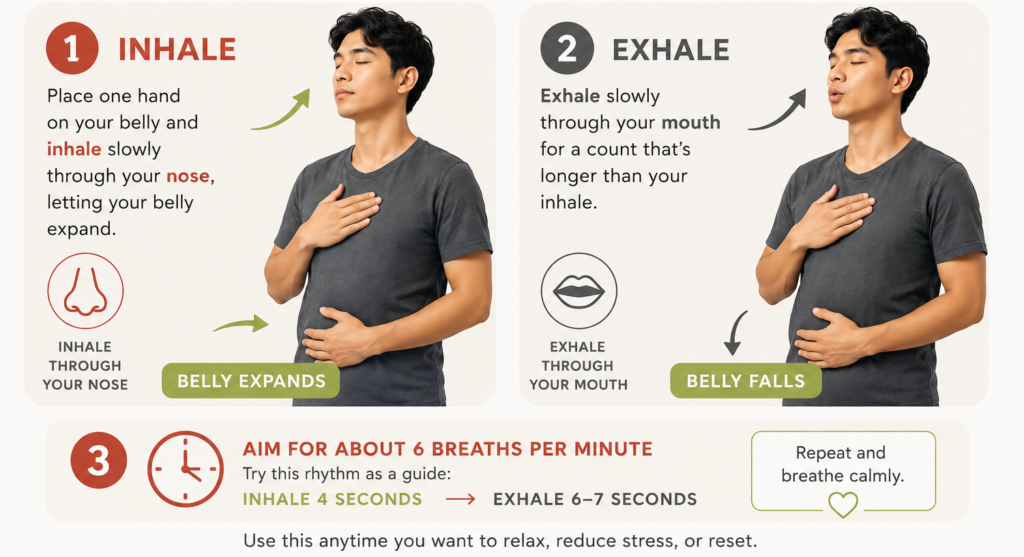
Diaphragmatic breathing, sometimes called belly breathing, involves breathing deeply into your abdomen rather than shallowly into your chest. When you breathe this way, your diaphragm moves downward and creates pressure that stimulates the vagus nerve.
The technique is straightforward. Place one hand on your belly and inhale slowly through your nose, letting your belly expand. Then exhale slowly through your mouth for a count that’s longer than your inhale. Aim for about six breaths per minute if you can.
Even a few minutes of belly breathing can shift your nervous system toward calm. Many people find it helpful first thing in the morning or right before bed.
2. Use the physiological sigh for fast stress relief
The physiological sigh is a breathing pattern your body already uses naturally—you’ve probably done it after a good cry or a moment of relief without even noticing. It involves taking two quick inhales through your nose, followed by one long, slow exhale through your mouth.
The double inhale fully expands your lungs and reinflates the tiny air sacs that can collapse when you’re stressed. The extended exhale then activates the vagus nerve almost immediately. This makes the physiological sigh particularly useful when you feel stress building and want a quick reset.
You can do this anywhere, even in a meeting or on a crowded train, without anyone noticing.
3. Hum, chant, or sing to activate vagal tone
Your vocal cords are directly connected to the vagus nerve. Any activity that vibrates them—humming, chanting, or singing—stimulates vagal activity. You don’t have to be a good singer for this to work.
Try humming during your morning routine or while you’re driving. Some people find chanting “om” during meditation particularly effective because the vibration resonates through the throat and chest. The vibration travels along the vagus nerve and promotes a sense of calm throughout your body.
4. Try cold exposure to reset the nervous system
Brief exposure to cold water activates what’s called the “dive reflex,” a physiological response that stimulates the vagus nerve and slows your heart rate. This reflex evolved to help mammals conserve oxygen when diving into cold water, but you can trigger it without going for a swim.
Splashing cold water on your face works well. So does ending your shower with 30 seconds of cold water or holding a cold pack to the sides of your neck. Start gently if you’re new to cold exposure—even mild cold can trigger the vagal response.
5. Move your body with gentle daily exercise
Gentle, consistent movement supports vagal tone more effectively than intense workouts. Walking, yoga, tai chi, and stretching all help regulate your nervous system without triggering the stress response that high-intensity exercise sometimes causes.
The key here is consistency rather than intensity. A daily 20-minute walk often does more for your vagal tone than an occasional intense gym session. Yoga is particularly effective because it combines movement with breath awareness, which amplifies the vagal benefits.
6. Meditate to build mind-body awareness
Meditation trains your nervous system to shift into a calm state more easily over time. When you meditate regularly, you’re essentially practicing the skill of activating your parasympathetic response on demand.
You don’t have to meditate for long periods to see benefits. Even five to ten minutes daily can make a meaningful difference. Loving-kindness meditation, which involves directing feelings of warmth toward yourself and others, has been shown in research to be particularly effective for improving vagal tone.1
7. Support the gut-brain axis through nutrition
The gut-brain axis refers to the two-way communication pathway between your digestive system and your brain. The vagus nerve serves as the main connection, carrying signals in both directions. What you eat directly influences this communication.
Foods that support healthy vagal signaling include:
- Fiber-rich vegetables and whole grains
- Fermented foods like yogurt, kimchi, and sauerkraut
- Omega-3 fatty acids from fish, walnuts, or flaxseed
A healthy gut microbiome sends positive signals through the vagus nerve to your brain, which supports mood stability and stress resilience.
8. Prioritize restorative sleep
Quality sleep allows your nervous system to recover and rebuild vagal tone. When you’re sleep-deprived, your body stays in a heightened state of stress, making it harder to activate the parasympathetic response during the day. It becomes a cycle—poor sleep leads to lower vagal tone, which leads to more stress, which leads to poorer sleep.
Simple sleep hygiene practices can help break this cycle. Keeping a consistent bedtime, limiting screens in the hour before bed, and keeping your bedroom cool and dark all support better sleep quality.
9. Add handheld vagus nerve stimulation
Handheld vagus nerve stimulation devices offer a direct, drug-free way to activate the vagus nerve. Unlike breathwork or meditation, which work indirectly, these devices deliver targeted stimulation to the nerve itself.
Truvaga Plus, for example, delivers vagus nerve stimulation in two-minute sessions that fit easily into any routine. Many people find that pairing device-based stimulation with breathwork or meditation amplifies the calming effects. The device can serve as an anchor for your daily practice, especially on busy days when longer practices aren’t realistic.
How to build a sustainable daily routine for vagal tone
Building lasting vagal tone requires consistency rather than perfection. Small practices stacked throughout your day create cumulative benefits that a single long session cannot match. The goal is to make vagus nerve activation a habit, not an occasional event.
Morning practices to set a calm tone
Starting your day with breathwork or gentle movement activates your parasympathetic nervous system before stress has a chance to accumulate. Even five minutes of diaphragmatic breathing while still in bed can set a calmer baseline for the hours ahead. Some people prefer a short yoga sequence or a brief walk outside.
Midday resets for stress relief
Brief vagus nerve exercises during the day interrupt the stress cycle before it builds. A physiological sigh takes only seconds. A minute of humming while you make lunch costs nothing. A quick session with a vagus nerve stimulation device can reset your nervous system between meetings.
The point is to catch stress early rather than letting it compound throughout the day.
Evening wind-down for better sleep
Calming practices in the evening prepare your body for restorative sleep. Gentle stretching, meditation, or a vagus nerve stimulation session signals to your nervous system that it’s safe to rest. This transition time between activity and sleep is often overlooked, but it makes a significant difference in sleep quality.
Time of Day | Suggested Practices |
Morning | Diaphragmatic breathing, gentle movement, short walk |
Midday | Physiological sigh, humming, device session |
Evening | Meditation, stretching, vagus nerve stimulation |
When to talk to a healthcare professional about chronic stress
While daily vagus nerve practices help many people manage stress, persistent anxiety or chronic stress that doesn’t improve may require professional support. A healthcare provider can assess whether additional interventions, therapy, or other treatments might be appropriate for your situation.
Vagus nerve practices work best as part of a comprehensive approach to mental wellness, not as a replacement for professional care when it’s needed. If you’ve been practicing consistently for several weeks without noticing improvement, or if your symptoms are interfering with daily life, reaching out to a professional is a reasonable next step.
Pairing daily practices with Truvaga for lasting mental wellness
Truvaga fits naturally into the daily routine you’re building. The devices offers a drug-free, convenient way to enhance the benefits of breathwork, meditation, and other vagus nerve practices you’re already doing.
With two-minute sessions backed by clinical research, Truvaga Plus provides a reliable way to activate your vagus nerve even on busy days when longer practices aren’t possible. Many users find it becomes the anchor of their daily stress management routine—a consistent touchpoint that makes everything else work better.
Frequently asked questions about daily practices for mental health and the vagus nerve
How do I reset my vagus nerve naturally?
You can reset your vagus nerve naturally through slow diaphragmatic breathing, humming, cold water exposure, or gentle exercise. Each of these practices activates the parasympathetic nervous system and improves vagal tone over time. The physiological sigh—two quick inhales followed by a long exhale—works particularly fast when you want immediate relief.
Can you overstimulate the vagus nerve?
Overstimulation is rare with natural practices and properly designed devices. Most people can safely incorporate daily vagus nerve exercises without concern. If you’re using a stimulation device, following the manufacturer’s guidelines helps ensure safe and effective use.
Can breathwork really stimulate the vagus nerve?
Yes. Slow, controlled breathing with extended exhales indirectly activates the vagus nerve, shifting your body from a stressed state into rest-and-digest mode. The mechanism is well understood—the diaphragm’s movement during deep breathing creates pressure that stimulates the nerve.
How long does it take to notice mental health benefits from vagus nerve practices?
Many people feel calmer immediately after a breathing exercise or stimulation session. However, building lasting vagal tone and sustained mental health benefits typically requires consistent daily practice over several weeks. Think of it like building a muscle—individual workouts help, but the real changes come from showing up regularly.
References:
- Kok, Bethany E., et al. “How Positive Emotions Build Physical Health: Perceived Social Connections Mediate the Upward Spiral Between Positive Emotions and Vagal Tone.” Psychological Science, vol. 24, no. 7, 2013, pp. 1123–32.
Author bio: