US
US 

Travel is supposed to help you relax. So why do so many people arrive feeling exhausted, overwhelmed, and anything but refreshed?
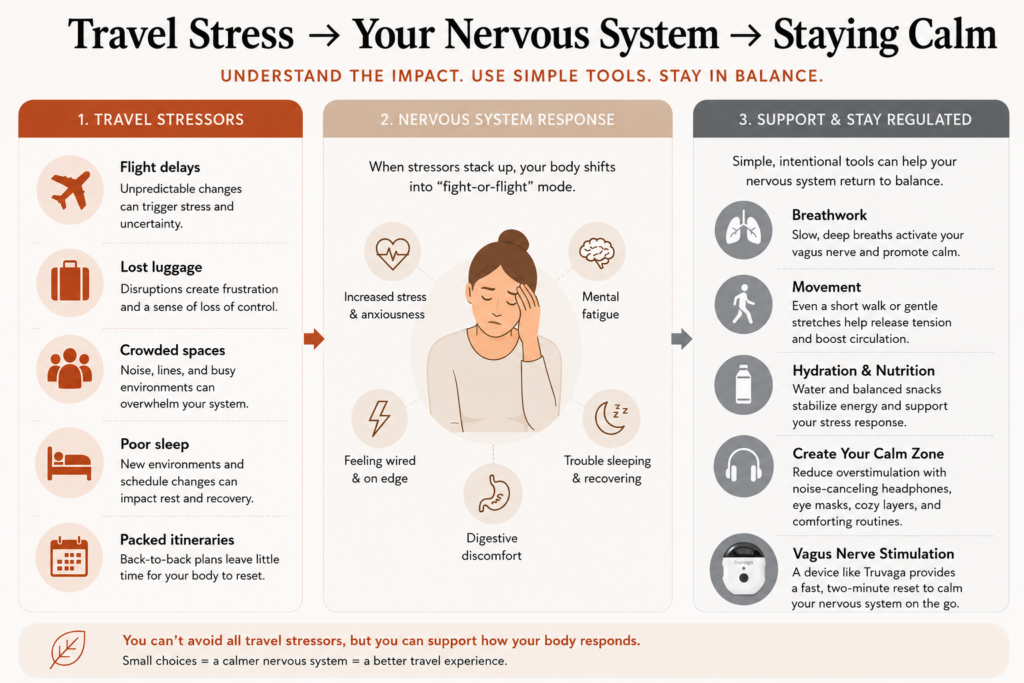
From flight delays and crowded airports to disrupted sleep and packed itineraries, travel can place unexpected demands on your nervous system. Even exciting trips can leave your body stuck in a heightened state of stress.
The good news? A few simple strategies can help you stay calm, resilient, and better equipped to handle whatever your journey brings.
Before we dive into our top five tips, let’s take a closer look at what happens inside your nervous system when travel stress takes hold.
Key Takeaways to Support Your Nervous System on the go
- Travel can activate your body’s stress response, even when you’re headed somewhere exciting.
- Movement, hydration, and intentional breathing help support nervous system regulation on the go.
- Creating a calm sensory environment can reduce overstimulation during travel.
- Preparation can help reduce stress before it starts.
- Portable vagus nerve stimulation offers a convenient way to support relaxation, focus, and recovery while traveling.
Understanding Your Nervous System on the Go
Your nervous system is your body’s command center, regulating everything from movement and memory to breathing and digestion. But when you travel, your autonomic nervous system takes center stage.
This system controls automatic functions like heart rate, digestion, and your body’s response to stress. It’s made up of two key parts: the sympathetic nervous system (your “fight-or-flight” response) and the parasympathetic nervous system (your “rest-and-digest” state).
When these two systems are in balance, your body can adapt to change and recover from stress. But travel can disrupt that balance. That’s why understanding nervous system regulation is key to staying calm, grounded, and resilient while you’re on the move.
Let’s explore five simple, science-backed ways to support your nervous system and stay centered wherever your travels take you.
Tip 1: Try Intentional Breathwork
Stress triggers shallow, rapid breathing, but you can override that. Diaphragmatic breathing, otherwise known as deep belly breathing, stimulates the vagus nerve and encourages parasympathetic (rest-and-digest) activity.(1)
Research shows that even one session of slow deep breathing can increase vagal tone and reduce anxiety.(2) Another recent trial confirmed that guided breathing reduces stress and anxiety in just a few minutes.(3)
How to practice:
- Inhale slowly through your nose, letting your belly rise
- Exhale gently through your mouth
- Repeat for a few minutes whenever you feel tension rise
Tip 2: Move, Even a Little
You don’t need a gym to get your blood flowing. Simple movements can work wonders for your mood, circulation, and nervous system.
Try:
- A short walk around the airport terminal or rest stop
- Gentle neck rolls or seated stretches
- A few rounds of Cat-Cow or shoulder rolls with deep breathing
Even minimal movement supports vagus nerve activation and helps shake off travel tension.
Tip 3: Eat and Drink to Support Your System
Your nervous system is highly sensitive to what you consume. Unfortunately, travel often means grabbing whatever’s quick, and that usually means salty, sugary, or fried.
Support your system by packing or choosing:
- Bananas, trail mix, or dark chocolate for mood support
- Low-sodium nuts and popcorn for sustained energy
- Water over soda or alcohol to stay hydrated
Avoid overdoing caffeine or skipping meals, both can heighten anxiety and deplete your system’s resilience.
Tip 4: Create Your Calm Zone
Travel environments can be overstimulating. To help your body relax, create a mini sanctuary with a few thoughtful tools:
- Noise-canceling headphones and calming playlists
- An eye mask or light-blocking sunglasses
- Cozy layers, socks, or a soft travel pillow
Bonus tip: pack for the “what-ifs.” Extra chargers, medication, or snacks can reduce uncertainty and help you feel more in control.
Tip 5: Use Vagus Nerve Stimulation Technology
Beyond manual techniques, non-invasive vagus nerve stimulation (VNS) offers quick, reliable support for nervous system regulation.
Implanted and non-invasive VNS technologies have been studied extensively and have received FDA clearance for conditions like epilepsy, cluster headache, migraines, rheumatoid arthritis, and depression(4).
Separately, a growing body of research is exploring the role of vagus nerve stimulation in supporting everyday wellness, stress resilience, and autonomic nervous system balance.(5)
Truvaga brings this technology into a simple at-home wellness device, delivering gentle vagus nerve stimulation in just two minutes. Research on Truvaga’s technology has shown it can help users feel calmer, improve focus, and support better sleep.
Final Thoughts
Travel can be energizing, but it can also strain your nervous system. With the right tools and a little preparation, you can stay calm, grounded, and adaptable throughout the journey.
Whether you’re on the move or finally unwinding, Truvaga helps keep your nervous system in balance, naturally.
Ready to feel more calm on the go?
Frequently Asked Questions About Staying Calm While Traveling
How does travel affect your nervous system?
Travel disrupts the balance between your sympathetic nervous system (“fight-or-flight”) and parasympathetic nervous system (“rest-and-digest”). Flight delays, overstimulating environments, poor food choices, and disrupted routines can all trigger stress responses that leave you feeling wired, anxious, and fatigued — even before you reach your destination.
What is the fastest way to calm your nervous system while traveling?
Intentional breathwork is one of the simplest and most accessible tools available. Slow, diaphragmatic breathing stimulates the vagus nerve and activates your body’s “rest-and-digest” response. However, utilizing a handheld and portable vagus nerve stimulation device, like Truvaga, can also provide calm while dealing with hectic travel plans.
Can vagus nerve stimulation help with travel stress?
Yes. Both manual techniques (like deep breathing and gentle movement) and non-invasive vagus nerve stimulation (VNS) can help regulate your nervous system on the go. Portable VNS devices offer a quick, science-backed reset that can help reduce stress, sharpen focus, and support better sleep during travel.
What foods and drinks support a calm nervous system while traveling?
Choosing foods like bananas, dark chocolate, nuts, and trail mix can help stabilize mood and energy. Staying well hydrated with water — rather than caffeine or alcohol — is especially important, as both dehydration and excess stimulants can amplify anxiety and deplete your system’s resilience.
References:
- Grossman, Paul, et al. The Influence of Breathing on the Central Nervous System. Frontiers in Psychology, 2019.
- Brown, Roberto M., et al. Benefits from One Session of Deep and Slow Breathing on Vagal Tone and Anxiety in Older Adults. Scientific Reports, 2021.
- Laborde, Sylvain, et al. Effects of Slow-Paced Breathing on Heart Rate Variability and Subjective Stress in Daily Life. Scientific Reports, 2021.
- Daban, Christophe, et al. Vagus Nerve Stimulation for Treatment-Resistant Depression: Acute and Follow-Up Results of an Italian Case Series. Journal of ECT, 1999.
- Vonck, Robrecht, et al. Vagus Nerve Stimulation…25 Years Later! Neuroscience & Biobehavioral Reviews, 2023.
Author bio: