US
US 


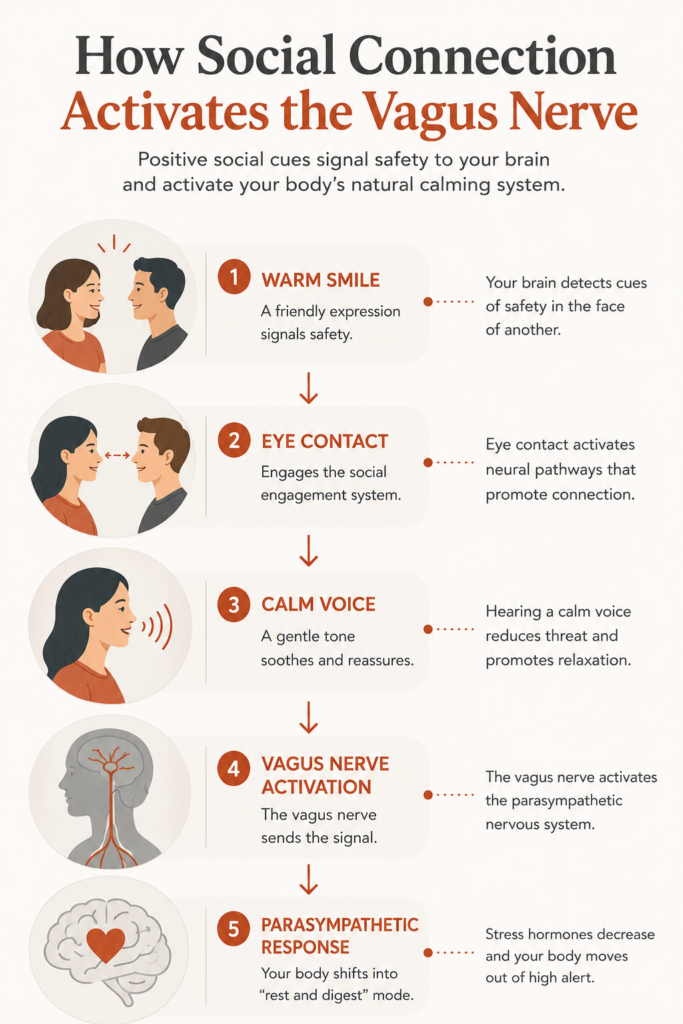
Your nervous system is always listening to the people around you. A warm smile, a shared laugh, or a moment of genuine eye contact can signal safety to your brain and shift your body out of stress mode—often without you even realizing it.
This happens through the vagus nerve, the nerve that connects your brain to your heart, gut, and lungs. When you feel safe with someone, your vagus nerve activates the parasympathetic response, helping you relax and recover. Below, you’ll learn five simple social habits that strengthen this connection and support your vagus nerve health every day.
Key Takeaways for Social Habits to Strengthen Your Vagus Nerve
- Social connection signals safety to your nervous system and promotes rest and digest.
- Spending time with calm, trusted people helps stabilize your own nervous system through co-regulation.
- Small moments of genuine connection, like a laugh or a hug, can strengthen vagal tone over time.
- Pairing social habits with breathwork, movement, or a device like Truvaga can amplify your results.
What Is the Vagus Nerve and Why It Matters for Stress
The vagus nerve is the longest cranial nerve in your body. It runs from your brainstem all the way down to your gut, connecting your brain to your heart, lungs, and digestive system along the way. Think of it as a two-way communication highway between your brain and your body.
This nerve plays a starring role in your parasympathetic nervous system, the part responsible for calming you down. While your sympathetic nervous system revs you up for action during stressful moments, the parasympathetic system does the opposite. It slows your heart rate, supports digestion, and helps you recover after the threat has passed.
How well your vagus nerve performs this calming function is called vagal tone. Higher vagal tone means your body bounces back from stress more quickly. Lower vagal tone, on the other hand, is linked to chronic stress, anxiousness, and that frustrating feeling of never being able to fully relax.
- Vagus nerve: The main communication pathway between your brain and body, influencing heart rate, digestion, and mood.
- Vagal tone: A measure of how efficiently your vagus nerve helps you recover from stress.
- Parasympathetic response: Your body’s natural calming system that promotes rest, digestion, and healing.
How Social Connection Strengthens Vagal Tone
You might not think of chatting with a friend or sharing a meal as a nervous system exercise. But that’s exactly what it is.
Dr. Stephen Porges developed something called Polyvagal Theory, which explains how humans have a “social engagement system” wired directly into the vagus nerve.1 This system responds to cues of safety—like a warm smile, a calm voice, or friendly eye contact—by activating the parasympathetic response. In other words, when you feel safe with someone, your body shifts out of stress mode.
When you interact with someone you trust, your nervous system picks up on subtle signals that say, “You’re safe here.” Your heart rate slows. Your breathing deepens. Your body moves away from high alert. This is why spending time with supportive people often feels so restorative, even if you can’t quite put your finger on why.
The process works both ways, too. When you’re around someone who is calm and regulated, their nervous system can help stabilize yours. This phenomenon is called co-regulation, and it’s one reason why a reassuring presence feels so grounding during stressful moments.
Social habits are often overlooked in conversations about vagus nerve health. Yet they’re among the most accessible and well-supported ways to strengthen vagal tone. The five habits below can be woven into everyday interactions without any special equipment or training.
5 Daily Social Habits That Support Vagus Nerve Health
Even brief moments of genuine connection can activate vagal pathways and help your body shift into a calmer state.
1. Make Eye Contact During Conversations
Sustained eye contact with a trusted person activates the social engagement system and signals safety to your brain. You don’t have to stare. Just a few seconds of genuine eye contact during a conversation can make a difference.
Try practicing during low-pressure interactions first. Make eye contact with a barista when you order your coffee, or hold your partner’s gaze a little longer during dinner. Over time, this small habit can help train your nervous system to feel more at ease in social settings.
2. Share a Genuine Belly Laugh With Someone
Deep, hearty laughter engages your diaphragm and stimulates the vagus nerve. When you laugh with someone else, the effect is amplified through social bonding and shared joy.
Watch a funny video together. Reminisce about a hilarious memory. Let yourself laugh freely when something strikes you as funny. The key is that the laughter is genuine and shared, not forced or polite. A real belly laugh does more for your nervous system than a dozen polite chuckles.
3. Sing or Hum Together
Singing and humming vibrate your vocal cords, which directly stimulate the vagus nerve. When you do this with others, you add a co-regulation element that enhances the benefit.
Sing along to the radio in the car with your kids. Hum while cooking with a partner. Join a community choir if that appeals to you. Even casual humming counts. The combination of vocal vibration and social connection creates a powerful vagal activation that neither activity achieves alone.
4. Offer a Hug or Caring Touch
Safe, consensual physical touch activates the parasympathetic nervous system and triggers the release of oxytocin, sometimes called the “bonding hormone.” A lingering hug, holding hands, or a supportive pat on the back all signal safety to your vagus nerve.
A 20-second hug can be especially effective. But even brief touch with a trusted person—like a high-five or a gentle squeeze of the shoulder—can help shift your body out of stress mode. The key is that the touch feels safe and welcome to both people involved.
5. Practice Active Listening and Co-Regulation
Active listening means being fully present with someone, without planning your response or checking your phone. When you truly hear another person, you create a space for mutual vagal activation. Both of you benefit.
This is co-regulation in action. By staying calm and attentive, you help the other person’s nervous system settle, and theirs helps yours. Maintain soft eye contact. Reflect back what you hear. Resist the urge to interrupt or jump in with advice. The simple act of being fully present is more powerful than most people realize.
Tip: Start with one or two of these habits and build from there. Consistency matters more than perfection.
Benefits of a Stronger Vagal Tone for Mental and Physical Health
When your vagus nerve functions well, the benefits extend far beyond feeling calm in the moment. A well-toned vagus nerve supports your body’s ability to recover from stress and maintain balance over time.
- Reduced anxiousness: You return to a calm state more quickly after stressful events.
- Better digestion: Vagal activation supports gut motility and reduces stress-related digestive issues such as bloating and cramping.
- Improved sleep: Parasympathetic activation promotes deeper, more restful sleep.
- Heart health support: Healthy vagal tone is associated with better heart rate variability, a marker of cardiovascular resilience.
- Enhanced emotional resilience: You recover faster from emotional upsets and feel more grounded overall.
Other Daily Practices That Stimulate the Vagus Nerve
Mindful Breathing Exercises
Slow, deep diaphragmatic breathing activates the vagus nerve and shifts your body into rest-and-digest mode. Try extending your exhale so it’s longer than your inhale. This sends a direct calming signal through the vagus nerve.
Gentle Movement and Meditation
These practices help lower cortisol levels and give your nervous system a chance to reset. A yoga class or a walk with a friend offers both physical and social benefits at once.
Handheld Vagus Nerve Stimulation
Vagus nerve stimulation devices offer a targeted, convenient way to activate the vagus nerve. These handheld tools deliver gentle electrical signals that stimulate vagal pathways, often in just a few minutes.
Truvaga provides science-backed vagus nerve therapy that fits easily into a daily routine. Used alongside social habits, breathing exercises, and gentle movement, vagus nerve stimulation can be a valuable part of a holistic approach to nervous system health.
Build a Sustainable Routine for Long-Term Vagus Nerve Health
Healing your nervous system is a journey, not an overnight fix. The most effective approach is to start small and build gradually.
Consistency matters more than intensity. Over time, small habits can reshape your baseline nervous system state. Combining social habits with other vagus nerve practices—like targeted vagus nerve stimulation—creates a well-rounded routine that supports lasting change.
Frequently Asked Questions About Social Habits and Vagus Nerve Health
How long does it take to see results from vagus nerve social habits?
Most people notice subtle shifts in their stress response within a few weeks of consistent practice. Building lasting vagal tone is a gradual process that improves with daily repetition.
Does texting or social media interaction stimulate the vagus nerve?
Digital communication lacks the vocal tone, eye contact, and physical presence that activate the social engagement system. In-person or video interactions are more effective for vagal stimulation— a phone call is better than a text, and face-to-face is better still. When quality in-person connection isn’t possible, a device like Truvaga can help fill the gap by directly stimulating the vagus nerve through gentle electrical pulses.
What is the social engagement system in polyvagal theory?
The social engagement system is the branch of the vagus nerve that responds to safe social cues, like friendly facial expressions and calm vocal tones. It helps shift your body out of fight-or-flight and into a relaxed state. When this system is active, you feel safe, connected, and calm.
References:
- Porges S. W. (2025). Polyvagal Theory: Current Status, Clinical Applications, and Future Directions. Clinical neuropsychiatry, 22(3), 169–184. https://doi.org/10.36131/cnfioritieditore20250301
Author bio: