

CategoriesSleep Health

The Paradox of Sleep: Why Trying Harder May Be the Very Thing Keeping You Awake

The Paradox of Sleep Why Trying Harder May Be the Very Thing Keeping You Awake

What if I told you that the biggest mistake people make before bed is trying to fall asleep? The harder you try, the more awake you become.

That is the paradox of sleep: achieving it requires us to stop working at it. Sleep is not a performance. It is surrender. And before you can surrender, your nervous system has to receive a very clear message: You are safe. The day is over. It is time to let go.

Nowadays, most of us do not go to bed only feeling tired. We go to bed overstimulated. We spend the day answering emails, checking texts, scrolling screens, solving problems, reacting to news, and thinking about tomorrow. Then we climb into bed and expect the brain to shut off on command. Unfortunately, it doesn’t work that way.

You don’t flip into sleep. You downshift into sleep.

Sleep Hygiene Basics: Why Knowing Isn't Enough

Most people who struggle with sleep have already heard the standard advice:

  • Keep the bedroom cool and dark.
  • Stop drinking caffeine late in the day.
  • Avoid alcohol before bedtime.
  • Put away your phone.
  • Maintain a consistent sleep schedule.
  • Exercise regularly, but not vigorously just before bed.
  • Finish dinner several hours before lying down.

These habits matter. They create the conditions in which sleep is more likely to occur. However, knowing the rules and convincing the nervous system to follow them are two different things.

You can have blackout shades, a perfect mattress, and the latest sleep tracker, and still find yourself staring at the ceiling at 2:17 in the morning. Why? Because sleep is not controlled by willpower. It is regulated by biology.

Your brain must gradually move away from the faster electrical patterns associated with attention, planning, and problem-solving and toward the slower rhythms that allow you to disengage from the outside world.

During the day, the brain spends much of its time in beta-wave activity: the busy, alert state required to read, calculate, decide, react, and worry.

As you relax, activity begins to shift toward alpha waves, associated with calm wakefulness.

As you cross the threshold into early sleep, theta activity becomes more prominent. Theta is the bridge between wakefulness and sleep; a quieter, more internally focused state in which thoughts become less organized, awareness of the room fades, and the brain begins to let go.
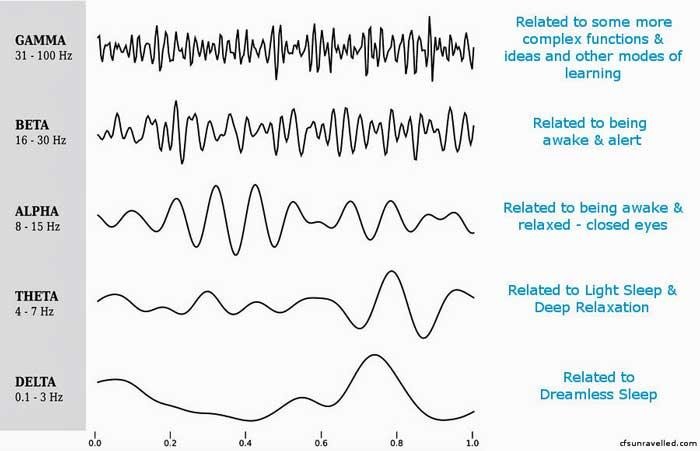
Sleep Hygiene Basics Why Knowing Isn't Enough

The goal is not to “make” yourself produce theta waves. That would turn sleep into yet another assignment. The goal is to create the physiological conditions that allow the brain to downshift naturally.


The Vagus Nerve: Your Body’s Downshift Mechanism

This is where the vagus nerve comes in. Think of the vagus nerve as one of the body’s major internal communication highways. It connects the brain with the heart, lungs, digestive tract, and other organs. It is a central part of the parasympathetic nervous system: the “rest, digest, repair, and restore” side of our physiology.

When sympathetic activity dominates, the body remains prepared for action. Heart rate may stay elevated. Muscles remain subtly tense. Thoughts keep moving. Even when no immediate threat exists, the nervous system may continue behaving as though something must be anticipated, solved, or prevented.1

Vagal activation helps shift the balance in the other direction. It signals that vigilance can soften and recovery can begin.

One of the simplest ways to encourage that shift is through breathing. Take a slow breath in, followed by an even slower, longer breath out. The prolonged exhalation helps favor parasympathetic activity. Repeat it without straining. You are not trying to breathe perfectly. You are simply giving the body a different signal.

Non-invasive vagus nerve stimulation (nVNS) can also be a welcome addition to the bedtime ritual. Devices like Truvaga, utilize gentle electric stimulation for two to four minutes to activate your vagus nerve and begin that transition into “rest-and-digest”. 

Using technology like VNS before bed can create a consistent wind-down routine that supports relaxation and nervous system recovery. 

The ritual itself matters. Repetition teaches the brain to associate a sequence of events, lower lights, quieter sounds, slow breathing, gentle stimulation, with safety and sleep.

The Gut-Brain Connection and Sleep

We now understand that the brain is not managing this transition alone. The gut and the trillions of microorganisms living within it, the gut microbiome, are also part of the conversation.

The microbiome can influence immune activity, inflammation, stress signaling, and the production or regulation of compounds involved in brain function. Gut microbes also produce short-chain fatty acids and interact with systems involved in neurotransmitters such as GABA and serotonin.

These compounds do not simply travel from the gut and pour directly into the brain. Biology is more interesting than that. Signals can be communicated through immune pathways, circulating metabolites, the stress-response system, and the vagus nerve.

The vagus nerve is therefore more than a calming switch. It is part of the information network connecting the intestinal environment with the brain.

The gut-brain connection is also bidirectional. An unsettled gut may send stress-related signals upward, while a brain stuck in high alert can alter digestion, intestinal movement, microbial balance, and barrier function. Stress disturbs sleep, poor sleep affects the microbiome, and microbiome changes may further influence stress regulation.

That can become a vicious cycle or an opportunity for intervention.

Beyond the Usual Sleep Supplements

A variety of supplements may help support the transition into sleep. Magnesium, particularly magnesium glycinate, is often used to support muscle relaxation and normal nervous system function. Melatonin can be useful when the body clock needs help, such as with jet lag or certain circadian disruptions, though more is not necessarily better. L-theanine may promote a calmer mental state without acting as a conventional sedative, and lemon balm has a long history of use for occasional nervousness and restlessness.

These approaches can be helpful, but our understanding of sleep support is becoming more specific. Not every probiotic does the same thing, and researchers are now studying particular strains, sometimes called psychobiotics, for their effects on stress and sleep. Formulas like ZenBiome Sleep, which pairs one such strain with L-theanine and lemon balm, are one example. The research is promising but still early.

What these approaches share is a goal: to support the conditions for sleep, not force it. The same idea sits behind a vagus-focused bedtime ritual, which helps the body downshift rather than overriding it.

Making Truvaga Part of Your Wind-Down Ritual

Supplements and probiotics can help set the conditions for sleep, but they work best alongside a consistent signal to your nervous system that it’s time to rest. Sleep doesn’t respond to effort. It responds to signals of safety, repeated often enough that your body learns to trust them: a cool room, dim lights, a slower breath.

Truvaga is designed to be part of that same sequence. Used for two minutes before bed, it delivers a direct, consistent signal to your vagus nerve: it’s time to downshift. 

Not a performance. Not one more thing to get right. Just a repeatable cue your body learns to recognize, night after night. After that, the only thing left to do is the hardest part: nothing at all.

Stop Chasing Sleep

Perhaps we need to rethink what a successful bedtime looks like.

The objective is not to get into bed and immediately “achieve” sleep. It is to create a runway: dim the lights, reduce incoming information, slow the breath, activate the vagus nerve, and support the gut-brain signals associated with calm.

Then stop checking whether it is working.

Sleep arrives when the systems responsible for vigilance finally stand down. It emerges when beta gives way to slower rhythms, when sympathetic activation yields to parasympathetic recovery, and when the gut, vagus nerve, and brain begin carrying the same message.

You are safe.

Nothing else needs to be solved tonight.

The day is over.

And now, you can let go.

Frequently Asked Questions about Sleep and the Vagus Nerve

Why is it harder to fall asleep the more I try?

Trying to fall asleep activates the same alert, problem-solving brain state that sleep requires you to leave. Sleep isn’t achieved through effort; it happens when the nervous system shifts from sympathetic “alert” activity to parasympathetic “rest-and-digest” activity. The more you monitor or force it, the more you keep that alert system engaged.

How does the vagus nerve affect sleep?

The vagus nerve is the primary driver of the parasympathetic nervous system, which governs rest and recovery. When vagal activity increases, heart rate slows, muscles relax, and the brain shifts from fast beta-wave activity toward the slower theta rhythms associated with falling asleep. Supporting vagal activation through breathing, ritual, or direct stimulation helps the body downshift naturally.

Can gut health really affect how well you sleep?

Yes. The gut microbiome communicates with the brain through several pathways, including the vagus nerve, immune signaling, and circulating metabolites, some of which are involved in neurotransmitters like GABA and serotonin. This relationship is bidirectional: stress can disrupt gut function, and gut imbalances can, in turn, affect sleep and stress regulation.

Is vagus nerve stimulation before bed safe to use nightly?

Non-invasive vagus nerve stimulation, like Truvaga, is designed for regular daily or nightly use. Using it consistently as part of a bedtime routine can help train the nervous system to associate the ritual with sleep, similar to how other consistent pre-sleep cues work.

References:

  1. Grillot, J. M., & Staats, P. S. (2025). An Open-Label Trial of Cervical Non-Invasive Vagus Nerve Stimulation Using a Proprietary Signal for the Management of Sleep and Depressed Mood. JSM Anxiety and Depression, 8(1), 205–450.

Author bio:

Picture of Mark J. Tager, MD

Mark J. Tager, MD

Physician. Author. Educator.

Mark Tager, MD, is CEO of ChangeWell Inc., and a well-recognized consultant in the fields of aesthetics, natural products, regenerative medicine, and laboratory sciences. He is co-founder of the Vagus Nerve Society where he is helping educate clinicians and consumers in non-invasive ways to harness the power of electric medicine for health. A prolific author and speaker, he has written a dozen books with the latest two being “Feed Your Skin Right” and "Integrative Aesthetics”. Connect with him on Instagram @drmtager for insights on integrative health and aesthetics.